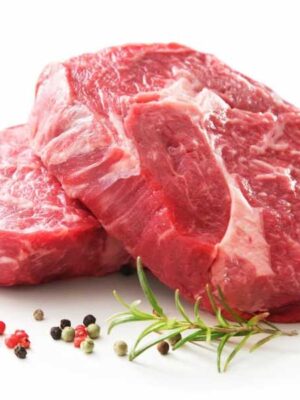
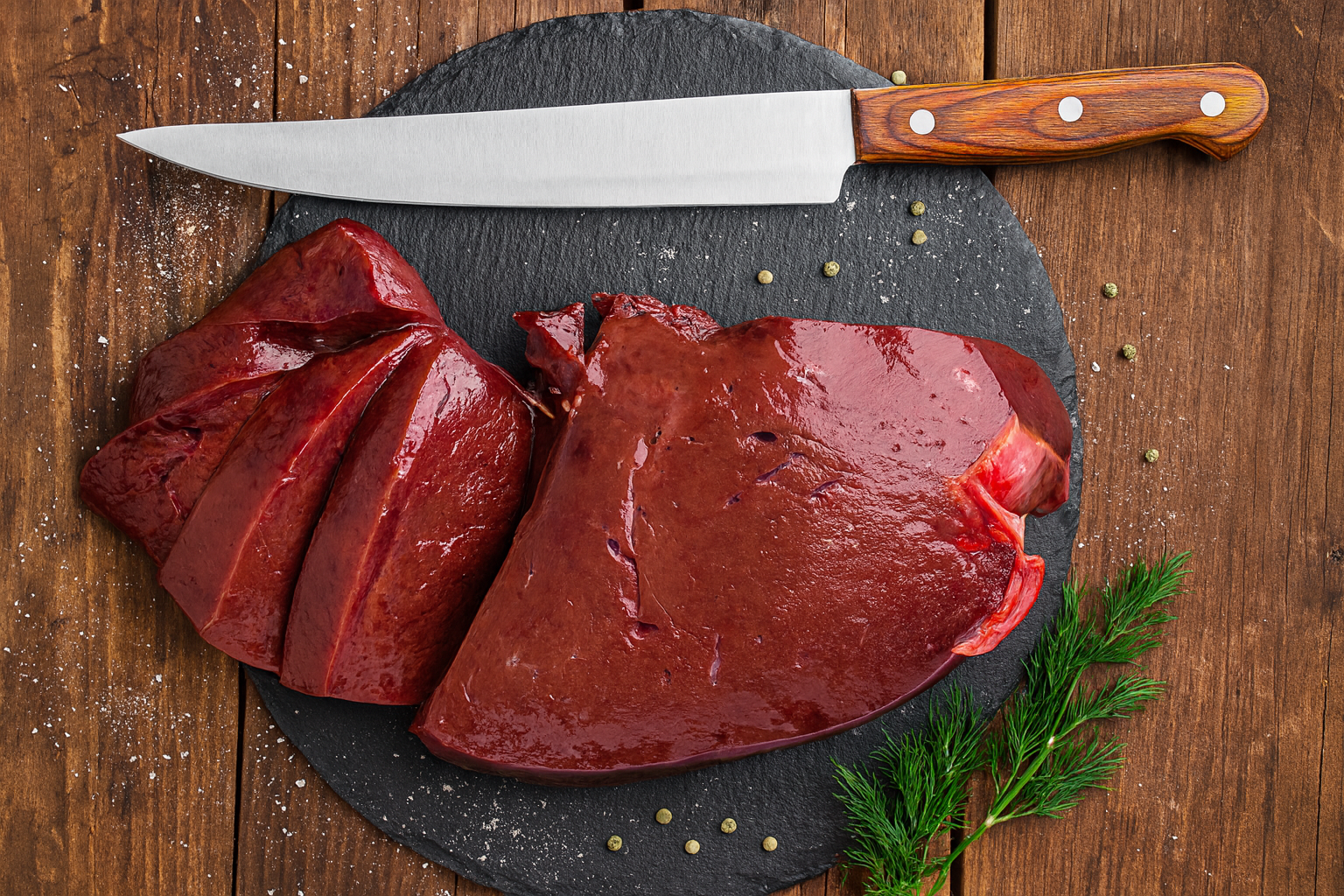
Beef liver is a highly nutritious organ meat known for its rich taste, soft texture, and exceptional health benefits. It is considered one of the most nutrient-dense foods available, providing essential vitamins, minerals, and high-quality protein. Because of its powerful nutritional profile, beef liver is often used to support overall health, energy levels, and proper body function.
Nutritional Value:
Beef liver is packed with important nutrients, including:
*High-quality protein
Supports muscle growth and repair.
*Vitamin A (very high)
Essential for vision, immunity, and skin health.
*B vitamins (B2, B3, B5, B6, B9, B12)
Helps with energy production, blood formation, and brain function.
*Iron (heme iron – easily absorbed)
Helps prevent anemia and boosts energy.
*Copper, Zinc & Selenium
Supports immunity, metabolism, and antioxidant protection.
*Low fat, low calories
Despite being nutrient-rich, it is relatively low in fat.
Usage:
Beef liver can be used in various recipes and cooking styles:
* Lightly pan-fried with butter, onions, and spices
* Added to stews or curries for extra nutrient density
* Ground and mixed with minced meat for burgers or kebabs
* Used in pâtés or liver spreads
* Added in small amounts to children’s or elderly diets for extra nutrition (in moderation)
Tip: Avoid overcooking, as it can make the liver tough and reduce nutrients.
Storage:
To maintain quality:
* Keep refrigerated at 0–4°C.
* Use within *1–2 days* for best taste.
Frozen Liver:
* Store at –18°C or below.
* Can be frozen for up to 6 months without losing quality.
* Thaw in the refrigerator, not at room temperature, to avoid bacterial growth.
After Cooking:
* Store in an airtight container in the fridge for up to 2 days.
* Reheat gently to avoid drying.