Yellow butter and white butter are both made from milk fat, but their colour, flavour, texture, and traditional uses can differ. White butter is often associated with fresh, traditionally churned butter and buffalo milk, while yellow butter commonly gets its colour from natural milk pigments such as carotenoids. Neither colour automatically means better quality the best choice depends on freshness, ingredients, taste, and how you plan to use it.
For families in the UAE, especially in Dubai, Abu Dhabi, Sharjah, Ajman, and Al Ain, choosing the right butter can make a noticeable difference in breakfast, cooking, baking, and traditional recipes.
What Is Yellow Butter?
Yellow butter is butter with a naturally yellow or golden appearance, usually caused by pigments called carotenoids that are naturally present in milk fat.
The exact colour can vary depending on the animal, feed, season, and milk composition. Cow’s milk butter is commonly yellowish because cow’s milk fat can contain more carotenoid pigments.
Yellow butter generally has:
- A golden to pale-yellow colour
- A creamy, rich flavour
- A smooth texture
- A familiar taste for cooking and baking
- Versatile uses in both sweet and savoury recipes
The colour itself does not prove that butter is more nutritious, fresher, or better quality. When comparing butter, it is more useful to look at the milk source, processing method, freshness, ingredients, and storage conditions.
What Is White Butter?
White butter is traditionally churned butter that has a white or very pale appearance, often associated with buffalo milk or freshly churned cream.
Buffalo milk naturally contains a higher proportion of milk fat and generally has much less carotenoid pigment than cow’s milk. As a result, butter made from buffalo milk can appear noticeably whiter.
Traditional white butter may have a soft, creamy texture and a fresh dairy flavour. Depending on how it is prepared, it may also contain a small amount of moisture and milk solids.
White butter is popular in South Asian households and is often enjoyed with:
- Paratha and roti
- Naan
- Fresh bread
- Breakfast dishes
- Traditional Indian and Pakistani recipes
- Homemade makhan-based preparations
Yellow Butter vs White Butter: Key Differences
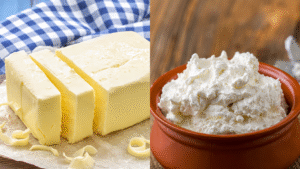
The biggest differences between yellow and white butter are usually colour, milk source, flavour, texture, and culinary tradition.
| Feature | Yellow Butter | White Butter |
|---|---|---|
| Colour | Yellow to golden | White to pale cream |
| Common association | Cow’s milk | Buffalo milk/traditional makhan |
| Main fat source | Milk fat | Milk fat |
| Flavour | Rich and creamy | Fresh, milky and creamy |
| Texture | Smooth and firm when chilled | Often softer when fresh |
| Common uses | Cooking, baking, spreading | Paratha, roti, naan, traditional dishes |
| Colour factor | More natural carotenoid pigments | Lower carotenoid pigmentation |
| Quality indicator | Colour alone is not enough | Colour alone is not enough |
Is Yellow Butter More Nutritious Than White Butter?
Not necessarily.
Butter is primarily a source of milk fat, regardless of whether it looks yellow or white. The nutritional profile can vary depending on the animal’s milk, fat content, processing method, and serving size.
The natural yellow colour of butter is mainly related to pigments in milk fat. Therefore, a yellow colour should not automatically be interpreted as a sign of superior nutrition.
Likewise, white butter should not automatically be considered healthier simply because it is pale or traditionally made.
For a meaningful comparison, check the product’s ingredients, preparation method, freshness, and nutrition information.
Why Is Some Butter Yellow and Some Butter White?
The colour of butter is influenced by the natural composition of the milk.
One important factor is beta-carotene and other carotenoid pigments. Cow’s milk can contain more of these pigments, which can contribute to a yellow or golden colour.
Buffalo milk generally contains much lower levels of carotenoids, which is one reason buffalo-milk butter can appear white.
Other factors can also affect butter colour, including:
- Animal species
- Animal feed
- Season
- Milk composition
- Cream processing
- Storage conditions
This is why butter colour can vary naturally from one batch to another.
Which Butter Is Better for Health?
There is no universal answer that yellow butter or white butter is healthier simply because of its colour.
Both are concentrated sources of milk fat and therefore should be consumed in appropriate portions.
If you are choosing butter for your family, consider these factors:
1. Freshness
Fresh butter should have a clean dairy aroma and pleasant taste. Any unusual sour, rancid, or stale smell can indicate that the product is no longer at its best.
2. Milk Source
Knowing whether butter comes from cow, buffalo, goat, or another milk source can help you understand its characteristics.
3. Ingredients
A simple butter product should have a clearly stated ingredient list. Avoid assuming that colour alone tells you what is inside.
4. Processing Method
Traditional churning and modern butter production can produce differences in texture and flavour. If you prefer traditional makhan, the preparation method can be particularly important.
5. Portion Size
Because butter is energy-dense, portion size matters more than whether the butter happens to be yellow or white.
White Butter vs Yellow Butter for Cooking
Both types can work well in cooking, but your choice may depend on the recipe.
Yellow butter is particularly convenient for:
- Baking
- Toast and sandwiches
- Sauces
- Sautéing
- Everyday cooking
- Pastries and desserts
White butter is especially popular for:
- Paratha
- Roti
- Naan
- Traditional breakfast dishes
- Indian and Pakistani recipes
- Fresh bread
If you enjoy the taste of traditional makhan, white butter can provide the familiar fresh dairy flavour many South Asian families prefer.
Which Butter Is Better for Baking?
Yellow butter is commonly preferred for baking because its familiar buttery flavour and consistent texture work well in cakes, cookies, pastries, and other baked foods.
However, white butter can also be used in recipes where its moisture and texture are suitable.
When substituting one butter for another, remember that water and milk-solid content can vary between products, so the final texture of baked goods may change.
Which Butter Is Better for Paratha and Roti?
For traditional South Asian meals, fresh white butter or makhan is a popular choice.
A spoonful of fresh makhan with hot paratha, roti, naan, or bread creates a rich and creamy combination that is especially familiar to Pakistani and Indian households.
For UAE residents who miss the taste of traditional dairy products from home, fresh white butter can be a convenient way to bring that familiar flavour to the family table.
Does White Butter Mean Buffalo Butter?
Not always, but buffalo milk is commonly associated with naturally white butter.
Buffalo milk contains less carotenoid pigment than cow’s milk, so butter made from buffalo milk can have a white or very pale appearance.
However, you should not identify the milk source based only on colour. Always check the product description or packaging for the actual milk source.
How Royal Desert Farm Approaches Fresh Butter
At Royal Desert Farm, the focus is on farm-fresh dairy products and reliable delivery for UAE households.
The business has been operating in the UAE since 2018 and works with certified local farms as part of its farm-fresh product offering.
For customers in Dubai, Abu Dhabi, Sharjah, Ajman, Al Ain, Ras Al Khaimah, Fujairah, and Umm Al Quwain, freshness and convenient delivery are important when purchasing dairy products.
When selecting butter, customers should consider:
- Milk source
- Freshness
- Ingredient quality
- Processing method
- Proper refrigeration
- Delivery and storage conditions
Royal Desert Farm also offers a wider range of farm-fresh dairy products, including milk, ghee, paneer, cheese, and labneh.
Yellow or White Butter: Which One Should You Choose?
The best butter depends on what you want from it.
Choose yellow butter if you want:
- A classic buttery flavour
- A versatile option for cooking
- Butter for baking
- A familiar golden appearance
- An everyday kitchen ingredient
Choose white butter if you want:
- Fresh traditional makhan
- A creamy, milky flavour
- Butter for paratha, roti, or naan
- A traditional South Asian dairy experience
- A naturally pale butter associated with buffalo milk
The Bottom Line
Yellow butter is not automatically better than white butter, and white butter is not automatically healthier than yellow butter.
The colour difference mainly comes from the natural composition of the milk, particularly carotenoid pigments. For UAE families, the better choice is the butter that matches your recipe, taste preference, and expectations for freshness and quality.
If you enjoy traditional makhan with paratha or naan, fresh white butter can be an excellent choice. If you need a versatile butter for baking, spreading, and everyday cooking, yellow butter may be more convenient.
FAQ: People Also Ask
Is white butter healthier than yellow butter?
Not necessarily. Both are mainly sources of milk fat, and colour alone does not determine healthfulness. Portion size, ingredients, freshness, and the overall diet are more important factors.
Why is buffalo butter white?
Buffalo milk generally contains much lower levels of carotenoid pigments than cow’s milk. As a result, butter made from buffalo milk can naturally appear white or very pale.
Why is cow butter yellow?
Cow’s milk fat can contain natural carotenoid pigments, including beta-carotene, which can give butter a yellow or golden colour.
Can I use white butter instead of yellow butter?
Yes, white butter can be used in many cooking and spreading applications. However, differences in moisture, texture, and milk solids can affect baking results, so recipes may need minor adjustments.
Is yellow butter better for baking?
Yellow butter is commonly used for baking because it provides a familiar buttery flavour and works well in many cake, cookie, pastry, and dessert recipes. The specific product’s fat and moisture content also matter.
Which butter is best with paratha?
Fresh white butter or traditional makhan is a popular choice with paratha because of its soft texture and fresh dairy flavour. Yellow butter can also be used according to personal preference.
Looking for fresh butter and traditional makhan in the UAE? Explore Royal Desert Farm’s farm-fresh dairy range and order for delivery across Dubai, Abu Dhabi, Sharjah, Ajman, Al Ain, Ras Al Khaimah, Fujairah, and Umm Al Quwain. For regular household dairy needs, you can also explore the monthly subscription option with free delivery